Exploring the Key Differences Among Various Custom Cabinetry Styles

Custom cabinetry can transform any space, adding both function and personality. Choosing the right style is essential because it shapes the room’s look and feel. With so many options available, understanding the differences between cabinetry styles helps you make a choice that fits your taste and needs. This post breaks down the most popular custom cabinetry styles, highlighting their unique features and practical uses.

Shaker Style Cabinets
Shaker cabinets are known for their simplicity and timeless appeal. They feature a flat center panel with square edges and minimal detailing. This style originated from the Shaker community, which valued function and modesty.
Design: Clean, straight lines with a recessed panel.
Materials: Often made from hardwoods like maple or cherry.
Finish: Can be painted or stained, usually in neutral tones.
Best for: Homes that want a classic, versatile look that blends well with both traditional and modern interiors.
Shaker cabinets are easy to customize with different hardware and finishes, making them a popular choice for kitchens and bathrooms.
Raised Panel Cabinets
Raised panel cabinets have a more decorative look. The center panel of the door is raised above the frame, creating depth and texture.
Design: Center panel is elevated with beveled edges.
Materials: Typically hardwoods such as oak or cherry.
Finish: Often stained to highlight wood grain.
Best for: Traditional or formal spaces where a rich, elegant appearance is desired.
These cabinets add a sense of craftsmanship and detail, making them ideal for classic kitchens or dining rooms.
Flat-Panel or Slab Cabinets
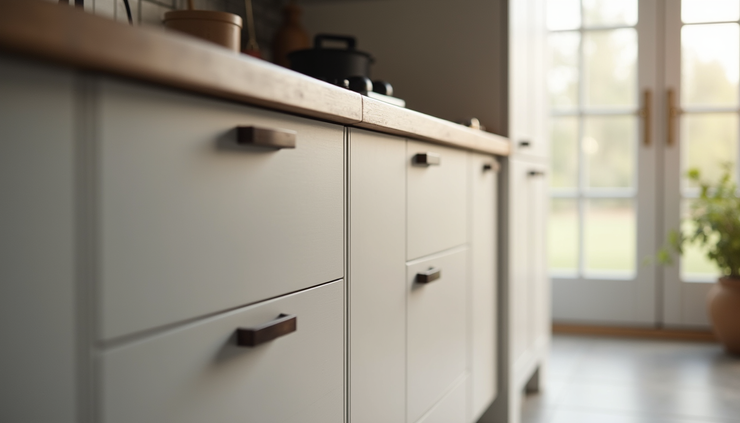
Flat-panel cabinets, also called slab cabinets, have a smooth, flat surface without any framing or panels.
Design: Completely flat door fronts with no ornamentation.
Materials: Can be wood, laminate, or MDF.
Finish: Often glossy or matte paint, or natural wood veneer.
Best for: Modern and minimalist interiors that emphasize clean lines and simplicity.
This style works well in contemporary kitchens where a sleek, uncluttered look is desired.
Beadboard Cabinets
Beadboard cabinets feature vertical grooves or “beads” on the door panels, adding texture and a cottage-like charm.
Design: Vertical lines or grooves on the door surface.
Materials: Usually painted wood or MDF.
Finish: Commonly white or pastel colors.
Best for: Casual, country, or coastal-style kitchens and bathrooms.
Beadboard adds warmth and character, making spaces feel cozy and inviting.
Glass-Front Cabinets
Glass-front cabinets include doors with glass panels instead of solid wood, allowing you to display dishes or decorative items.
Design: Wood frame with clear, frosted, or textured glass inserts.
Materials: Wood frames with glass panels.
Finish: Can match other cabinetry styles.
Best for: Kitchens or dining rooms where you want to showcase collections or add visual interest.
These cabinets break up solid cabinetry and add lightness to the room.
Distressed Cabinets
Distressed cabinetry has a worn or aged look, created by techniques like sanding, scraping, or glazing.
Design: Intentional imperfections and weathered finishes.
Materials: Often hardwood with special finishing.
Finish: Antiqued paint or stain.
Best for: Rustic, farmhouse, or vintage-inspired interiors.
This style adds personality and a lived-in feel, perfect for casual, comfortable spaces.
Choosing the Right Style for Your Space
When selecting a cabinetry style, consider these factors:
Room style: Match cabinetry to your home’s overall design.
Functionality: Think about storage needs and ease of cleaning.
Budget: Some styles require more craftsmanship and materials.
Personal taste: Choose a style that reflects your personality and lifestyle.
For example, a modern home might benefit from flat-panel cabinets with sleek hardware, while a traditional home could shine with raised panel or shaker cabinets.


Comments